
 When to consider surgery?
 When to consider surgery?
If your child still has seizures after trying two seizure medications, families should consider asking about a referral for surgical evaluation. There are many different types of epilepsy surgery.
About Pediatric Epilepsy Surgery
If your child’s seizures aren’t getting better with medicine, epilepsy surgery may be an option. But considering surgery doesn’t mean making a fast decision—it means learning what’s possible and what might help.
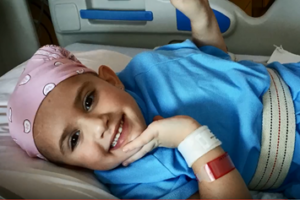 There are different types of epilepsy surgery, some surgeries aim to stop seizures completely while others help reduce how often seizures happen. The right choice depends on your child’s unique situation.
Many of today’s surgeries are minimally invasive, using small openings or lasers for quicker recovery. In other cases, traditional open surgery may be needed.
The most important part? Having a care team that listens to you, explains things clearly, and helps you decide what’s best for your child.
DEE-P Connections and the Pediatric Epilepsy Surgery Alliance are partnering on a webinar series exploring surgical options for epilepsy. This collaboration empowers families with expert insights, shared experiences, and trusted resources to support informed decisions about epilepsy surgery.
Is Surgery an Option for Your Child’s DEE?
Many families are told there’s “nothing more to do.” This video challenges that. Learn how epilepsy surgery can offer real hope—even for kids with complex, drug-resistant DEEs.
Experts and parents share what signs to look for, how evaluations work, and why it’s never too early to ask about surgery.
Watch now and find out if surgery could change your child’s path.
Epilepsy Surgery for Rare Genetic Disorders.
Surgery may offer real hope for kids with rare genetic epilepsies or DEEs—even when seizures seem uncontrollable.
In this video, Dr. Ahmad Marashly (Johns Hopkins) and Monika Jones, JD (Pediatric Epilepsy Surgery Alliance) explain when surgery makes sense, how genetics play a role, and what families need to know.
They break down the science, the process, and the potential—backed by research and real-world experience.
Could a VNS, RNS or DBS Help?
Neurostimulation devices like VNS, RNS, and DBS may help reduce seizures in kids with drug-resistant epilepsy.
In this video, leading epilepsy experts and a parent caregiver share how these options work, who they might help, and what to expect from treatment.
Cirugía de epilepsia para espasmos infantiles
This special webinar in the Pediatric Epilepsy Surgery Alliance’s “Let’s Talk About Epilepsy Surgery” series focuses on surgical options for treating infantile spasms. Executive Director Monika Jones joins Dr. Aria Fallah and Dr. Shaun Hussain of UCLA to discuss key treatments, including resective surgery, corpus callosotomy, and vagus nerve stimulation. The session helps families understand when surgery may be considered and what each option involves.
When to Consider Surgery
The third webinar in the Pediatric Epilepsy Surgery Alliance’s “Let’s Talk About Epilepsy Surgery” series explores when families should start considering surgery for drug-resistant epilepsy. Founder Monika Jones is joined by Dr. Charuta Joshi of Children’s Hospital Colorado and parent advocate Catherine Flynn.
They discuss key indicators—like diagnosis, treatment response, and quality of life—and share guidance on recognizing when to seek a surgical evaluation. Flynn also shares her family’s journey through epilepsy surgery following her child’s diagnosis of mesial temporal sclerosis.
Tomar la decisión sobre la cirugía de epilepsia para su hijo
In the final webinar of the Pediatric Epilepsy Surgery Alliance’s “Let’s Talk About Epilepsy Surgery” series, Dr. George Ibrahim, pediatric neurosurgeon at The Hospital for Sick Children in Toronto, presents a five-step, value-based framework to help families navigate complex surgical decisions.
Using a real-world example—resecting eloquent cortex vs. implanting a responsive neurostimulation device—Dr. Ibrahim shows how breaking decisions into steps makes them more manageable. He stresses the importance of understanding all options through a thorough evaluation at a specialized epilepsy center.
Una descripción general de la cirugía de epilepsia pediátrica
The Epilepsy Foundation presents a webinar on pediatric epilepsy surgery—a vital but often underused option for children with drug-resistant seizures. Dr. Nancy McNamara of the University of Michigan covers surgical options, evaluations, and outcomes, stressing early referral to specialized centers.
Parent advocate Megan Maddow shares her son Anthony’s powerful journey through epilepsy and hemispherectomy. The webinar also highlights collaborative efforts with the Brain Recovery Project and the Hemispherectomy Foundation to expand access, education, and family support.
Want to learn more?
Visit the Pediatric Epilepsy Surgery Alliance website to explore their full library of educational videos. From expert insights to powerful parent stories, each webinar is designed to help families better understand surgical options for children with drug-resistant epilepsy.
 The Pediatric Epilepsy Surgery Alliance is the leading organization supporting families through the epilepsy surgery journey, offering expert-driven resources, advocacy, and connections to top medical centers and peer communities.
 Cirugía de la epilepsia, Clínica Mayo
 Procedimientos y resultados de la cirugía de epilepsia., Salud de la UCSD
 La vida después de la cirugía de epilepsia, Salud de la Universidad de Utah
 Tipos de cirugía de epilepsia, Fundación de Epilepsia
Si tiene una herramienta o recurso sugerido, por favor contáctenos.
 Epilepsy surgery in developmental and epileptic encephalopathies; Georgia Ramantani & Elaine Wirrell (University Hospital Zurich & Mayo Clinic, Epilepsy & Behavior)
Epilepsy Surgery for Cognitive Improvement in Epileptic Encephalopathy; John R. McLaren et al (Massachusetts General Hospital & Harvard Medical School, Neurosurg Clin N Am)
 Epilepsy surgery in children under 3 years of age: surgical and developmental outcomes; Masaki Iwasaki et al (National Center of Neurology and Psychiatry, Japan, Journal of Neurosurgery: Pediatrics)
 Predicción del resultado de la cirugía de la epilepsia en la práctica clínica: modelos de predicción versus perspicacia clínica; Anne Kathararina Fassin et al (Centro de Epilepsia de Hessen, Alemania, Seizure Journal)
La desconexión quirúrgica de la red de epilepsia se correlaciona con mejores resultados; Elliot G. Neal et al (Universidad del Sur de Florida)
Tendencias en hospitalización y reingreso por epilepsia pediátrica y subutilización de la cirugía de epilepsia en los Estados Unidos; Yusuke Okubo et al (Escuela de Salud Pública Fielding de UCLA)
Rehabilitación de la memoria y entrenamiento cerebral para pacientes con epilepsia quirúrgica del lóbulo temporal: un informe preliminar; Loes Koorenhof et al (Universidad Abierta, Reino Unido, Seizure Journal)
 Epilepsy surgery in infants up to 3 months of age: Safety, feasibility, and outcomes; Jonathan Roth et al (Multicenter International Study, Epilepsia)
Si tienes un artículo sugerido, por favor contáctenos.
Didn’t find what you're looking for? Try the search box—there’s so much more to explore!