DEE Caregivers Share Urgent Needs for Accelerated Treatment and Improved Measurement for DEEs
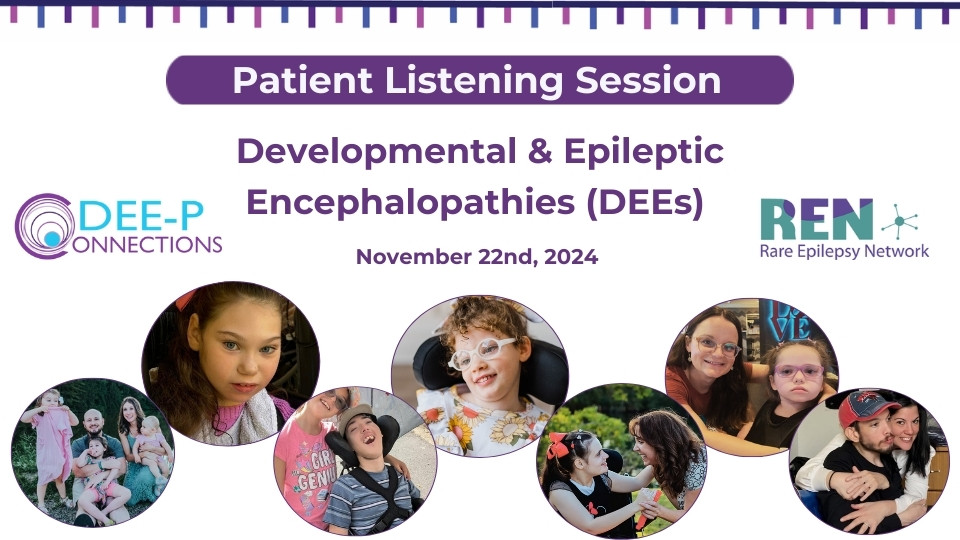
On November 22nd, DEE-P Connections, in partnership with the Rare Epilepsy Network (REN), held a DEE Patient Listening session with members of the Food and Drug Administration (FDA). The session brought together parents, patient advocates, researchers, and FDA representatives to discuss the challenges and priorities of the DEE community.
Key Themes:
- Shared Challenges Across Diagnoses
- Barriers to Clinical Trial Participation
- Limitations of Current Outcome Measures
- Risk Tolerance for New Treatments
Families caring for children from seven different developmental and epileptic encephalopathy (DEE) communities shared the daily challenges their loved ones face. Their experiences highlighted the similarities across these rare epilepsy disorders. In addition to refractory seizures, there are a range of concerns that families outlined including a wide array of non-seizure challenges that affect quality of life—difficulties with communication, fine and gross motor skills, intellectual disability, sleep disruptions, hypotonia, challenging behaviors, cortical visual impairment (CVI), pulmonary instability, gastrointestinal (GI) issues, and more. The intensive impacts on both the individuals living with DEEs as well as their whole families were discussed.
One mom’s remarks captured the urgency of the message: “We need access to more trials focused on DEEs, not just gene-specific. We’re running out of time.”
On measurement, caregivers were unanimous that, as one mom shared, “it is clear that current outcome assessments do NOT capture the abilities or improvements of our children” and that “we need to think outside the box to measure progress by our children and change the way we [caregivers] collect data.”
Our clinical expert on the webinar, Professor Jenny Downs from The Kids Research Institute in Perth, Australia, an accomplished researcher and physiotherapist, shared recent data from The Inchstone Project on the limitations of existing clinical outcome assessments (COAs), which are unable to measure small but meaningful improvements in those with profound impairments. She also outlined the abilities, priorities for improvement, and unmet needs across DEE/NDD communities from our recent community caregiver DEE Parents Speak survey, echoing the priorities caregivers shared in their testimonies.
Be on the lookout for our report with a full overview of the session as well as a community reenactment session to share the impact of what was presented. We invite the broad DEE community to join our efforts through DEE-P Connections and The Inchstone Project as we provide resources, community, and research to improve the lives of individuals and families impacted by the many severe DEEs. Please continue to follow along (join our mailing list, follow us on social media) as we share the outputs from this meeting in a summary report and future webinar.
We thank all of the caregivers who helped advance understanding of the extensive unmet need and the urgency for treatments to improve the quality of life across the DEEs by sharing their stories, as well as the FDA for listening to the challenges, needs, and priorities of the DEE/NDD community.
We are also grateful to Longboard Pharmaceuticals and Neurocrine Biosciences for their financial contributions that helped us carry out this session. The session would not have been nearly as smooth without the team at Canary Advisors who helped us prepare for all aspects of this meeting. DEE-P volunteer Gabrielle Sarlo also aided in planning for the meeting. To read the full report on the FDA’s website, visit the FDA’s PFDD website.