
COVID-19 DEE Research

While there has been a lot of research on COVID-19 in the general population, none of this work has been in the DEE space. Therefore, we created a survey to better understand how families who have loved ones with DEEs have navigated decisions about whether to vaccinate their child with a DEE against COVID-19, document any side effects and better understand the severity of any COVID-19 infections for those with rare epilepsies.
Our team is made up of amazing DEE researchers and clinicians including:
Daniel Freedman DO: Assistant Professor in the Department of Neurology at Dell Medical School and a board-certified pediatric neurologist in UT Health Austin Pediatric Neurosciences at Dell Children’s in Texas
Tina Sosa MD, Msc: Assistant Professor in the Division of Pediatric Hospital Medicine and Associate Chief Quality Officer at Golisano Children’s Hospital in NY
Anne Berg PhD: Adjunct Professor of Neurology – Epilepsy/Clinical Neurophysiology and COMBINEDBrain
Richard M. Carpiano PhD, MPH: Professor of Public Policy - University of California Riverside
This is a recording of the webinar, “What are we learning about COVID-19 vaccines and infections in those with rare epilepsies?”, which was held on July 21st, 2022.
您是否對 5 歲以下患有罕見癲癇病的人接種 COVID-19 疫苗的安全性感到好奇?
您不確定是否要讓患有罕見癲癇症的孩子接種 COVID-19 疫苗?
聆聽令人難以置信的專家小組的發言,解答您有關 COVID-19 疫苗和感染的問題。
AES Conference 2022
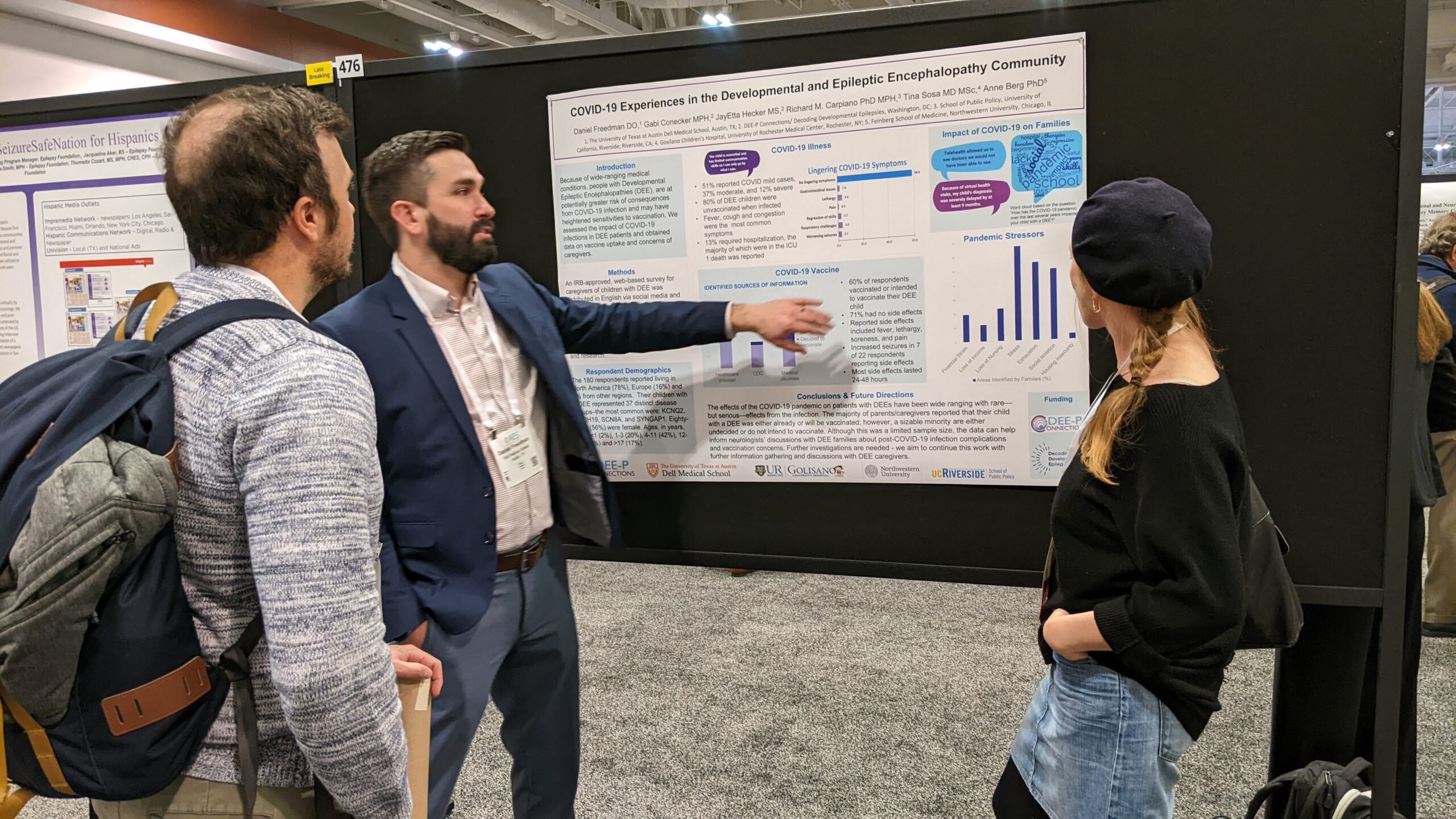
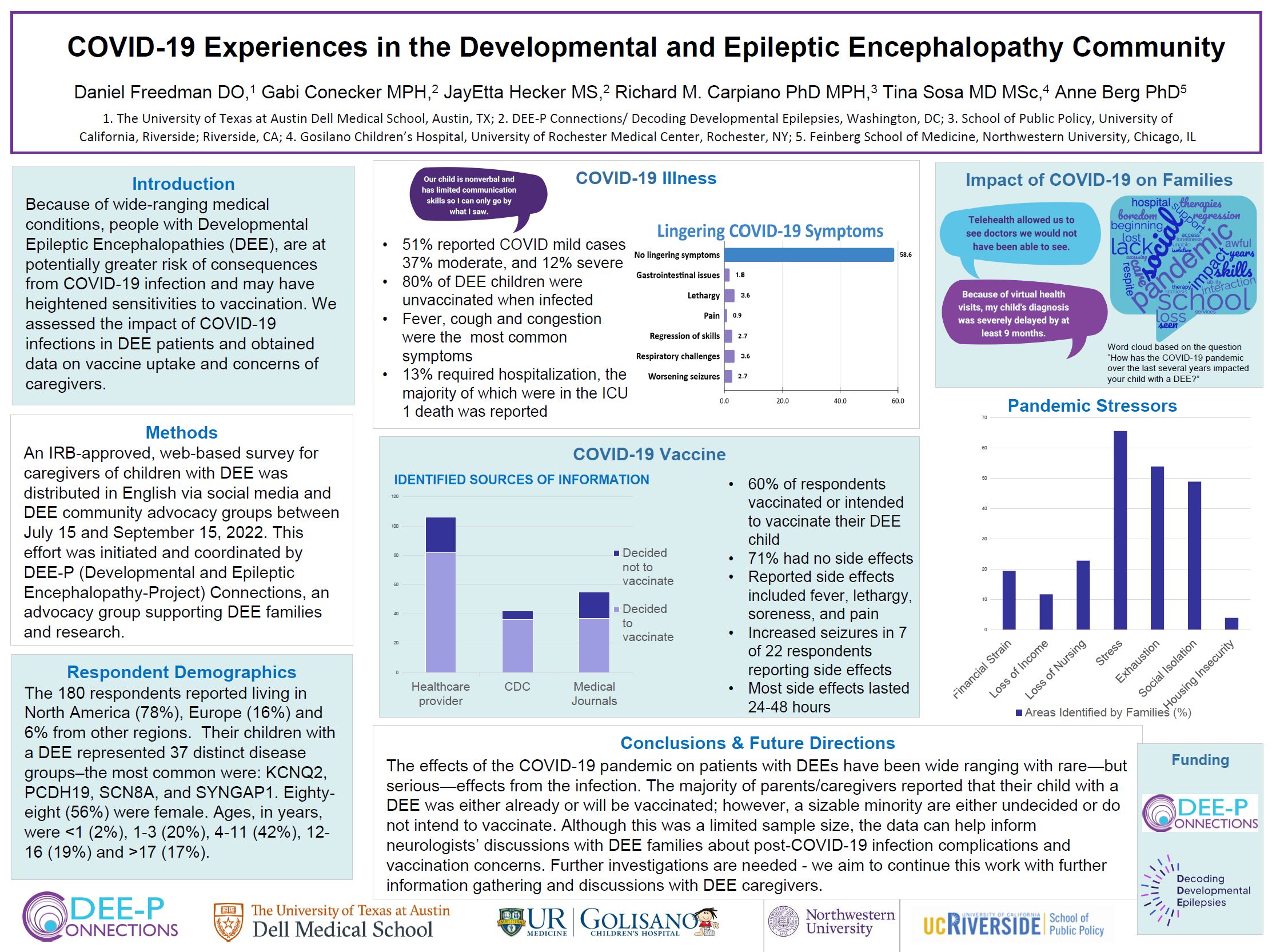
Our late-breaking abstract on our COVID-19 work was accepted by the American Epilepsy Society to present at their 2022 conference! Click on the poster to make it bigger!
Main Poster Insights
COVID-19 Illness:
- 51% of respondents reported mild COVID cases, 37% moderate, and 12% severe
- 80% of DEE children were unvaccinated when infected
- Fever, cough, and congestion were the most common symptoms
- 13% required hospitalization, the majority of which were in the ICU, 1 death was reported
COVID-19 Vaccine:
- 60% of respondents vaccinated or intended to vaccinate their DEE child
- 71% had no side effects
- Reported side effects included fever, lethargy, soreness, and pain
- Increased seizures in 7 of 22 respondents
- Most side effects lasted 24-48 hours
- The majority of respondents got information about the vaccine from their healthcare provider. The second most popular source was medical journals, and the third was the CDC.
Pandemic Stressors (Listed from Highest % of Families Affected to Lowest %):
- Stress
- Exhaustion
- Social Isolation
- Loss of Nursing
- Financial Strain
- Loss of Income
- Housing Insecurity